
私人订制
China shares desertification-control expertise at UNCCD COP17 in Mongolia_我的网站

一 |

A Chinese delegation proposed establishing an International Grassland Day at the 17th Session of the Conference of the Parties (COP17) to the United Nations Convention to Combat Desertification (UNCCD), which opened in Ulan Bator of Mongolia on Monday. China also pledged to share its expertise and experience in combating desertification with other countries during the event.
China shared its experience in science-based desertification control, grassland restoration, technological innovation and livelihood development at the event, while highlighting regional achievements under China-Arab States, China-Mongolia and China-Central Asia cooperation mechanisms on desertification control, the Global Times learned from China's National Forestry and Grassland Administration (NFGA).
China has contributed about 25 percent of the world's newly added green areas and taken the lead in achieving zero growth in land degradation.
Held under the theme "Restoring Land, Restoring Hope," COP17 brings together representatives from 197 parties, as well as UN agencies, international organizations, research institutions and businesses, to discuss issues including the restoration of degraded land, sustainable land management, drought resilience and grassland conservation.
The conference will also feature plenary sessions, implementation review meetings and high-level ministerial dialogues, with a focus on innovative financing, drought resilience, grassland restoration and pastoralists' well-being. Interactive forums on water resources, food systems and other topics will also be held.
Hosting COP17 in Ulan Bator is expected to place an international spotlight on Mongolia's land restoration priorities, including approaches that safeguard livelihoods, strengthen food security and protect ecosystems in dryland regions.
The conference is also taking place during the United Nations International Year of Rangelands and Pastoralists 2026 (IYRP 2026), declared by the UN General Assembly and championed by Mongolia. The year provides an important opportunity to advance the sustainable management, restoration and conservation of rangelands and to highlight the needs of pastoralist communities whose livelihoods depend directly on these ecosystems, according to Xinhua News Agency.
Desertified land accounts for about one-quarter of China's total land area. After more than half a century of sustained efforts, China has achieved a historic shift from "advancing sands and retreating people" to "expanding greenery and retreating deserts," with both desertified and sandy land areas continuing to decline, according to the NFGA.
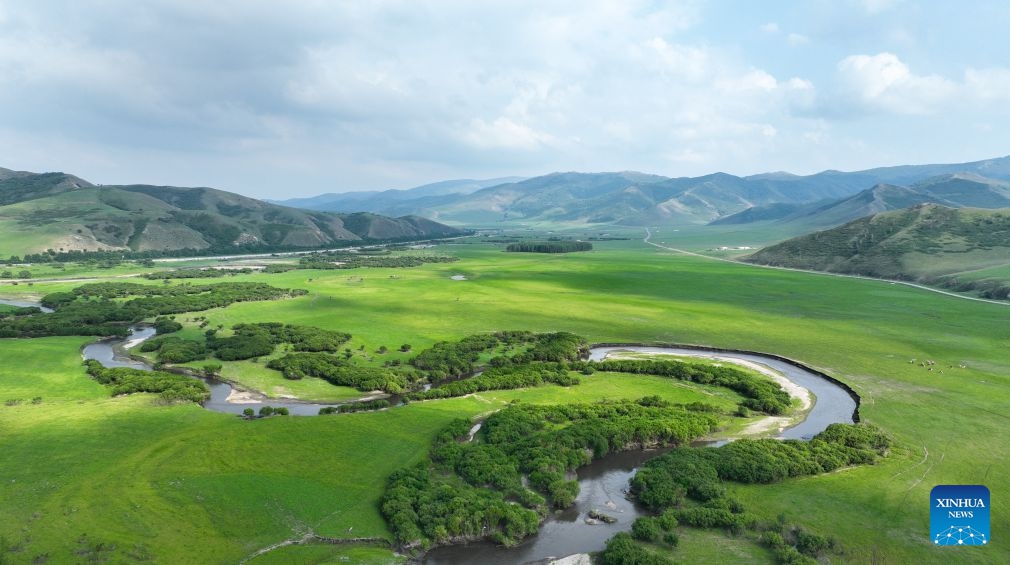
China has become the first country in the world to achieve zero growth in land degradation, with 53 percent of its treatable sandy land effectively restored.
Over the past five years, China has completed 36.6 million hectares of land greening, raising its forest coverage rate to more than 25 percent and contributing about 25 percent of the world's newly added green areas, statistics from the NFGA show.
Moreover, China attaches great importance to international cooperation on desertification control. It has established the China-Mongolia Desertification Prevention and Control Cooperation Center, the China-Arab International Research Center for Drought, Desertification, and Land Degradation, and the China-Central Asia Desertification Prevention and Control Cooperation Center, providing Chinese solutions and expertise to the global fight against desertification, according to China's National Forestry and Grassland Administration.
For example, hundreds of wells drilled by Chinese teams have turned sandy areas into farmland in Egypt, supporting desert reclamation. China has supplied drought-resistant saplings to Mongolia's "Billion Trees" campaign. Africa's own "Great Green Wall" initiative, inspired by China's National Forestry and Grassland Administration, has also gained support from China, Xinhua reported last year.
。

二 | 数字经济面向实体产业布局 7月,在位于湘江新区的国家智能网联汽车(长沙)测试区,智能网联汽车预期功能安全测试基地正式启用。

三 |

四 | 自2016年从零起步,长沙现在已获批包括国家智能网联汽车(长沙)测试区等在内的4块国家级牌照。几年间,以人工智能、大数据、云计算等为支撑的长沙智能网联汽车产业迅速发展。在对新业态新模式的培育中,湖南注重面向实体经济,从数字化、网络化、智能化方向对新兴产业链全方位布局,并逐步产生集聚效应。如今,在湘江新区317公里的开放测试道路上,已经汇聚了350余家智能网联汽车产业链重点企业和108家智能汽车及人工智能产业相关研发机构。记者在前不久召开的2022互联网岳麓峰会上获悉,随着《湖南湘江新区智能网联汽车创新应用示范区行动方案(2022—2025)》的出台,湘江新区将允许自动驾驶出租车进行全无人应用示范、全天候运行,长沙也将成为全国测试道路里程最长、区域最大的城市。

五 | 数字技术赋能传统产业转型 利用互联网技术对传统产业进行全方位、全链条的改造,有助于提高全要素生产率,发挥数字技术对经济发展的放大、叠加、倍增作用。“公司以工业互联网平台为基座,构建数字化产业链平台,推动传统串联型产业联合向网络化产业生态转型。”中联重科股份有限公司副总裁、长沙市工程机械行业协会会长郭学红在2022互联网岳麓峰会“智能制造”专场论坛中表示。重工行业的“灯塔工厂”三一重工桩机工厂,凭借5G与工业互联网的深度融合,实现了8个柔性工作中心、16条智能化生产线的5G全连接,整个工业制造全流程高效互联互通。这些都是湖南发展数字技术赋能传统产业转型升级的缩影。截至今年8月,湖南省累计建成5G基站7.7万个,连续3年实施“数字新基建”100个标志性项目,包括1个国家级“双跨”工业互联网平台和44个省级工业互联网平台在内,主要工业互联网平台连接设备超过410万台(套),实现44.5万家中小企业“上云”。“截至8月28日,在提供人工智能技术与生态服务的讯飞开放平台上,湖南开发者人数已达9.6万。

六 | ”科大讯飞股份有限公司湖南公司总经理俞仁忠说。数字产业拓展实体经济空间 打开手机应用,轻点几下,几盏灯、一台风机等设备就实现了远程协同控制,在2022互联网岳麓峰会展示区,湖南开鸿智谷数字产业发展有限公司交通行业解决方案专家甘琳边演示边告诉记者,“一条公路的隧道,可能有上千台设备,要实现远程协同控制,离不开智慧操作系统。” 这家落户于湘江新区的企业,在其母公司拓维信息同华为达成鸿蒙生态合作共识后,于今年6月打造了“公路在鸿OS(操作系统)发行版”,专用于建设自主可控的全路网、全要素精准感知与管控体系。“数字技术的使用,让智慧交通、万物互联成为可能。”甘琳告诉记者,目前这套系统即将在贵州在建高速公路项目中落地。

七 | 推动互联网、大数据、人工智能同产业深度融合,既拓展了实体经济发展空间,也推动了湖南数字产业围绕实体产业向上下游延伸。同开鸿智谷类似,在湘江新区,一批电子元器件、计算机及通信设备、智能终端、软件信息和互联网企业协同发力,软件和信息服务业表现出强劲增长态势。

八 | 2021年,湖南省规模以上软件和信息技术服务业企业达1328家,合计实现营业收入1836.8亿元,从业人员总数为16.7万人,较2020年增长22.8%。
Current article:http://4ura6d.ruwentaqintiaozhupapaigai.shop/jqa0/5hx157r.html
Published on:17:17:08
 欺诈游戏
欺诈游戏 听见你的声音